




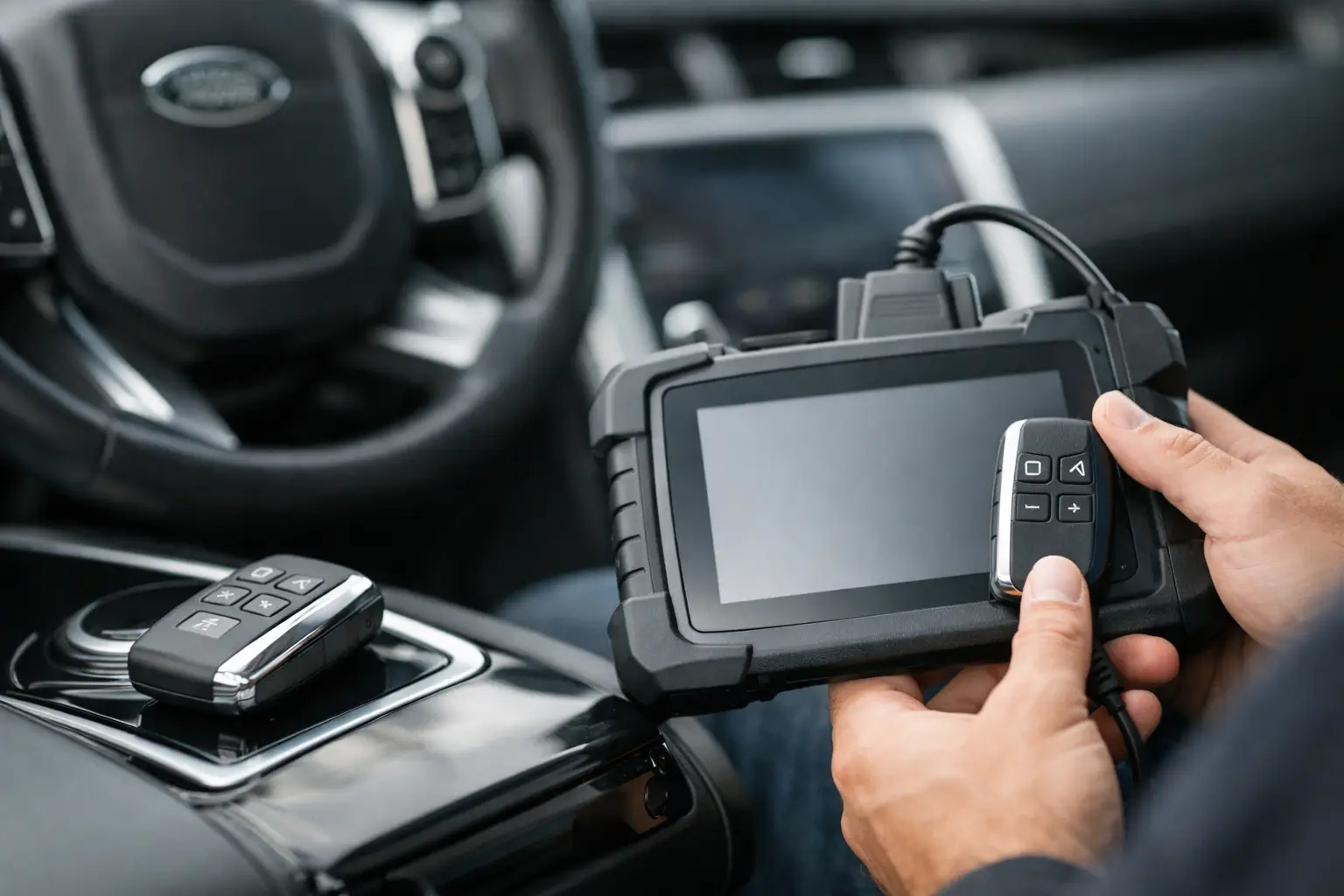
Few things get a Land Rover owner’s attention faster than a key that suddenly stops working, a vehicle that will not recognize the fob, or a replacement key that looks right but will not pair. Land Rover key programming is not just about cutting a blade or syncing a remote. It is part of the vehicle’s security system, and when it is done incorrectly, the result can be anything from an annoying no-start problem to a key that works only part of the time.
For many owners, the frustrating part is that key issues can seem simple on the surface. The battery may be fresh, the buttons may still click, and the vehicle may even respond intermittently. But modern Land Rover systems rely on communication between the key, immobilizer, body control modules, and onboard software. That means proper diagnosis matters just as much as the programming process itself.
What land rover key programming actually involves
Land Rover key programming is the process of electronically matching a key or smart fob to your vehicle so the security system recognizes it as authorized. On newer models, that process usually includes remote locking functions, passive entry features, and immobilizer authorization so the engine can start.
This is why a replacement key is not a simple hardware purchase. Even if the key shell and internal chip are correct for the model, it still has to be introduced to the vehicle through the right diagnostic path. In many cases, the system also needs to verify key count, confirm module communication, and clear faults that may interfere with programming.
With Jaguar Land Rover vehicles, the exact procedure depends on year, model, and system generation. A Range Rover, Discovery, or Defender may all have different programming steps depending on the platform. That is one reason general repair shops often struggle with these jobs. The vehicle may require brand-specific diagnostic access and familiarity with JLR procedures, not just a universal scan tool.
When key programming is needed
Sometimes the need is obvious. You lost a key, bought a replacement, or want a spare. Other times, the signs are less clear. A fob may stop communicating after water damage, module replacement, battery voltage issues, or a failed attempt to program an aftermarket key.
A customer may also come in thinking the key is the problem when the real issue is elsewhere. Weak vehicle battery voltage, a fault in the body control module, antenna issues, or stored immobilizer errors can all mimic a bad key. That is why testing first is the right move. Programming a new key into a vehicle with an unresolved electrical fault can waste time and money.
If you only have one working key left, that is also a smart time to act. Waiting until all keys are lost usually makes the job more complicated. In some cases, all-keys-lost scenarios require additional security steps and more time for setup and verification.
Why proper diagnostics matter before programming
A Land Rover is not forgiving when multiple systems are out of sync. Before key programming begins, the vehicle should be checked for fault codes, module communication problems, battery condition, and any signs of prior unsuccessful programming attempts.
This is where dealer-level tools make a real difference. Using JLR SDD allows a specialist to follow the correct factory-style path, confirm compatibility, and see whether the issue is truly key-related or part of a larger system fault. That matters because a remote that will not pair is not always a remote problem.
There is also a security reason to be thorough. Key programming affects theft deterrent systems. Shortcuts, guesswork, or unsupported tools can create new problems, including keys that program incompletely or modules that stop communicating properly afterward. A careful process protects both convenience and vehicle integrity.
Replacement key vs reprogramming an existing key
These are not always the same service. If your current key has lost synchronization or the vehicle has experienced a control module issue, reprogramming may restore normal operation. If the key itself is damaged, incorrect, or no longer recognized by the system, replacement may be necessary.
The right answer depends on the condition of the key and the vehicle’s response during testing. A worn case or broken buttons do not automatically mean the electronics inside are unusable. On the other hand, a key that has internal circuit damage or the wrong transponder type cannot be fixed by programming alone.
Owners are often tempted by lower-cost online keys. Sometimes those parts appear identical but are not truly compatible with the vehicle’s frequency, security protocol, or system generation. That can turn a straightforward appointment into a longer diagnostic process. In many cases, the cheapest key becomes the most expensive route once fitment and programming issues are factored in.
Common problems that get mistaken for key failure
A dead or weak key battery is the obvious one, but it is far from the only cause. Vehicle battery voltage is a major factor, especially on newer Land Rover models with sensitive electronics. If system voltage drops too low, the vehicle may behave unpredictably, including failing to detect the key consistently.
Water intrusion is another common issue, especially in climates where keys get exposed to moisture, humidity, or accidental splashes. Internal corrosion can interfere with remote functions even when the outer shell still looks fine. Physical wear also matters. Repeated drops can damage solder joints or internal components that are not visible from the outside.
Then there are module-related issues. Faults in the body control system, receiver antennas, or security modules can all produce symptoms that feel like key failure. If a shop skips diagnosis and goes straight to programming, the owner may leave with the same problem still unresolved.
Why specialization matters with Land Rover systems
Land Rover vehicles are sophisticated, but that sophistication means service accuracy matters. A shop that sees these vehicles regularly understands the difference between a simple fob issue and a deeper communication or immobilizer problem.
That experience saves time in practical ways. It helps identify whether a replacement key is appropriate, whether the vehicle has software or module faults affecting the process, and whether there are signs of previous unsuccessful attempts. It also reduces the chance of installing the wrong part or using a programming method that does not match the vehicle.
For owners in Honolulu, that matters even more because convenience matters. Most people are not looking for a trial-and-error process with their daily driver. They want the problem identified correctly, the key programmed properly, and the vehicle returned with confidence that the issue has actually been resolved. That is where a dedicated Jaguar Land Rover specialist like JA Auto can offer a more focused experience than a general repair facility.
What to expect during a key programming appointment
A proper appointment usually starts with verifying the complaint. Does the vehicle fail to start, fail to lock or unlock, or only respond under certain conditions? From there, the technician checks battery condition, scans relevant modules, confirms key compatibility, and follows the correct programming procedure for that exact model.
If a new key is being added, the system may need to register it and confirm all existing keys on the vehicle. If a lost key is part of the concern, the vehicle may also need to be updated so missing keys are no longer authorized. That step is often just as important as adding the new one.
After programming, the key should be fully tested. That means more than pressing the lock button once. It includes confirming remote functions, start authorization, and any proximity or passive entry features the vehicle is equipped with. A complete check helps avoid the common problem of a key that seems fixed in the parking lot but fails later in normal use.
A practical approach for owners
If your Land Rover key is unreliable, the best next step is not guessing. Start with proper testing. If you have only one functioning key, consider adding a spare before you are dealing with a more expensive all-keys-lost situation. And if you are shopping for a replacement, make sure the key itself is correct for your vehicle before programming is even attempted.
The bigger point is simple. Key issues are security issues, convenience issues, and reliability issues all at once. When they are handled with the right equipment and model-specific experience, the process is usually straightforward. When they are not, small problems tend to become larger ones.
If your key has become inconsistent or you need a properly programmed replacement, treating it early is usually the easiest path forward.

Leave a Reply